Italian Citizenship Jure Sanguinis 2026: New Rules, Court Updates, and How to Apply
Are you an American, Brazilian, or Australian citizen looking to reclaim your Italian roots? You are not alone. 2026 is shaping up to be a pivotal year for Italian Citizenship by Descent (Jure Sanguinis).
While the right to citizenship is based on blood ties, recent rulings by the Italian Supreme Court (Cassazione) and upcoming hearings in the Constitutional Court have created urgency. Many applicants are worried: will the rules change in 2026?
This guide explains everything you need to know about requirements, the "1948 Case" exception, and how to navigate the difficult Italian Consulate booking system.
The "2026 Risk": Is the Law Changing?
If you have been researching online, you might have heard about the "Minor Issue" (La questione del minore).
Currently, there is a legal debate regarding ancestors who naturalized as US citizens while their Italian children were still minors.
- The Situation: In the past, this did not break the line of citizenship.
- The Risk: Recent interpretations suggest that if the parent lost Italian citizenship (by becoming American) while the child was a minor, the child might have lost it too.
- The Verdict: The Italian Constitutional Court is expected to clarify this in 2026.
Our Advice: If you are eligible, do not wait. Filing your application (either via Consulate or Court) sooner rather than later is the best way to secure your rights before any potential restrictive ruling becomes final.
Jure Sanguinis Requirements: Are You Eligible?
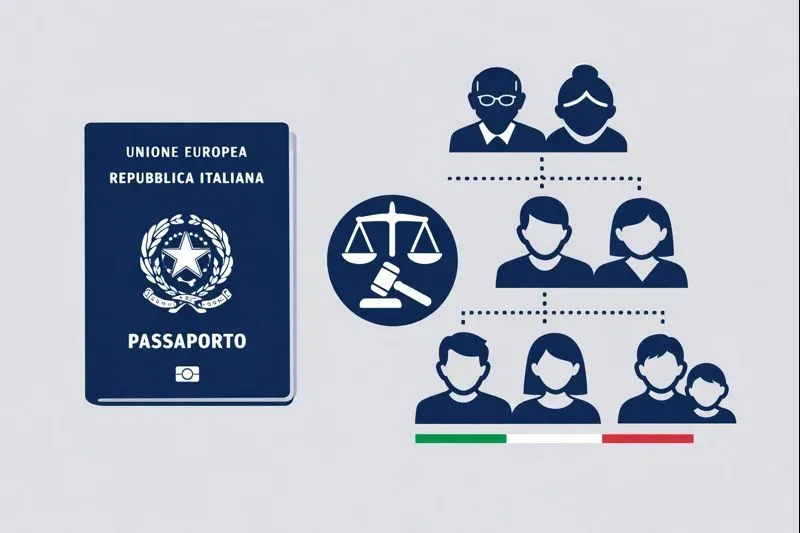
Italian citizenship is transmitted "by blood" without generational limits, provided the line of transmission was never broken.
The Basic Criteria checklist:
- The Italian Ancestor: You must have an ancestor (Parent, Grandparent, Great-Grandparent) who was born in Italy.
- No Naturalization (or Late Naturalization): Your ancestor must not have become a naturalized citizen of another country before the birth of the next person in line.
- Example: If your Great-Grandfather became a US citizen in 1930, but your Grandfather was born in 1928, you are eligible (he was still Italian when his son was born).
- The 1948 Rule (Female Line): Before 1948, Italian women could not pass citizenship to their children. If your line involves a woman who gave birth before January 1, 1948, you cannot apply through the Consulate. You must apply via the Judicial Path (see below).
How to Apply: Consulate vs. Italian Court
There are two main ways to claim your passport in 2026.
Path A: The Italian Consulate (Administrative)
This is the standard route. You must apply at the Italian Consulate that serves your state of residence (e.g., New York, Los Angeles, Miami).
- Pros: Lower cost (300 Euro fee).
- Cons: Extremely difficult to get an appointment (Prenot@Mi system is often full) and wait times can exceed 2-3 years.
Path B: Judicial Action in Italy (The "Against the Queue" Appeal)
If you cannot get an appointment at your Consulate or if you fall under the "1948 Rule," you can hire an Italian lawyer to sue the Ministry of Interior directly in the Italian Courts.
- Pros: You do not need to come to Italy. The lawyer represents you. It is often faster than the Consulate backlog.
- Cons: Higher legal fees.
Document Checklist for 2026
To succeed, you need to build a "chain" of vital records connecting you to your Italian ancestor.
- From Italy: Birth and Marriage certificates of your ancestor (Estratto dell'atto di nascita/matrimonio). You must request these from the specific Comune (Municipality) in Italy.
- From your Country (USA/Other): Birth, Marriage, and Death certificates for every person in the direct line.
- Naturalization Records: A crucial document is the "Certificate of Non-Existence of Records" (e.g., from USCIS in the USA) proving your ancestor did not naturalize or naturalized after the birth of the child.
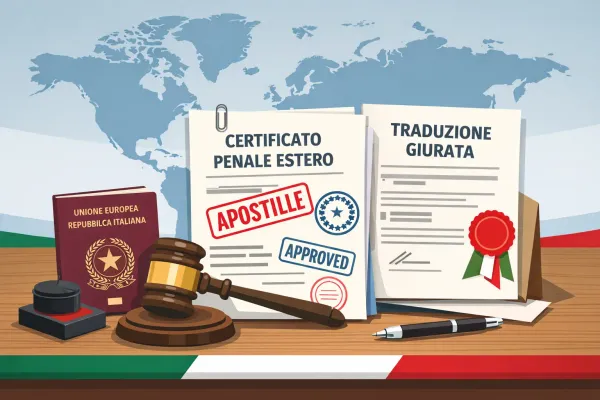
- The Golden Rule: All non-Italian documents must be translated into Italian and Apostilled (legalized).
Frequently Asked Questions
Can I live in Italy while waiting? Yes, you can apply for a specific Permit of Stay (Permesso di Soggiorno per Attesa Cittadinanza) if you move your residency to Italy to apply directly at a Town Hall (Comune). This is the fastest method (3-6 months) but requires you to actually live in Italy.
Do I need to speak Italian? No. For Citizenship by Descent (Jure Sanguinis), there is no language test required.
Need Help?
Navigating Italian bureaucracy can be overwhelming. Whether you need help retrieving a birth certificate from a small Italian village or understanding the latest 2026 court rulings, staying informed is key.
Stay tuned to Tutto Stranieri for the latest updates on the Constitutional Court hearings in March 2026.
Not eligible for citizenship by descent? Check if you qualify for the Italian Digital Nomad Visa 2026 instead.
 admin
admin